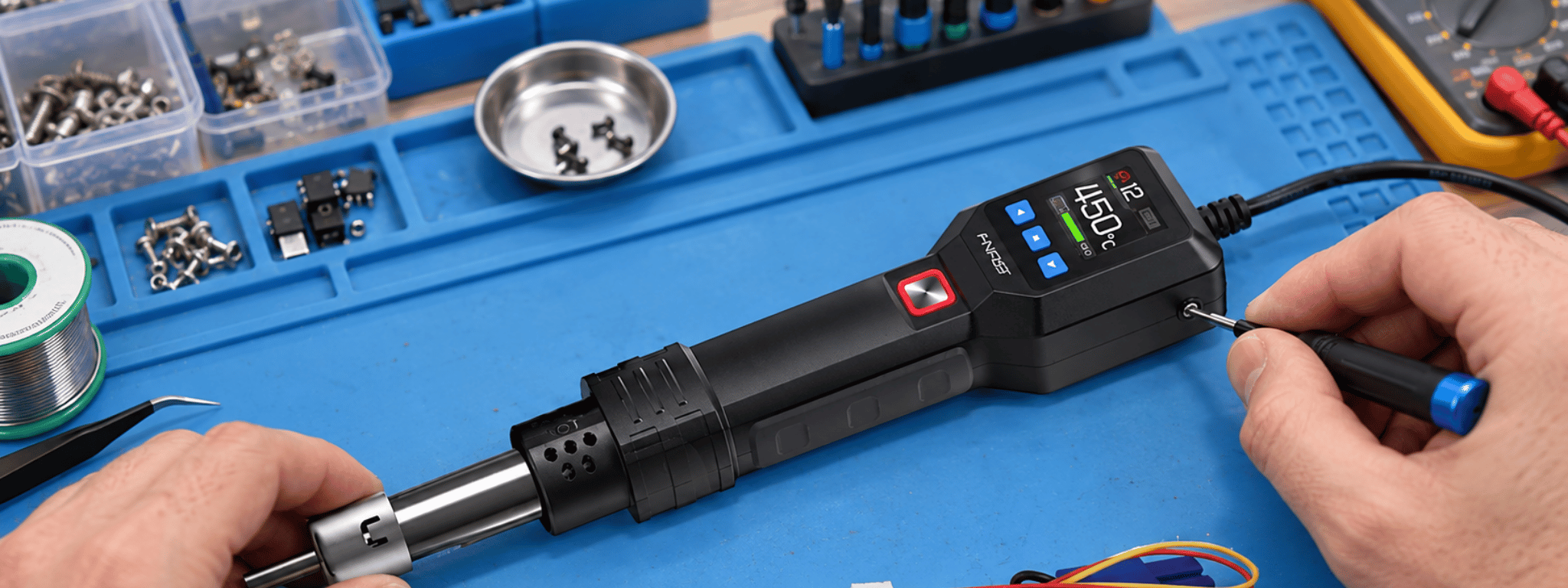
FNIRSI SAG-55 Heater Replacement and Repair Experience
When the heater in our FNIRSI SAG-55 hot air station failed, the hardest part of the repair was finding a suitable spare part. Since we could not obtain the original heater, we replaced it with an alternative part. The new heater fit, but the device gave an error on first connection. We solved the problem by correcting the temperature sensor socket connection.
We wanted to share the process step by step to help others who face the same situation.
1. Finding the original spare part
The SAG-55 is a compact and useful device. However, when the heater fails, you need to find a suitable spare part to use the device again.
At the time we were looking, we could not obtain the original heater. Therefore, we evaluated alternatives with similar dimensions and connection structure. The application described here is a repair experience that was successful on our own device.
2. Installing the alternative heater
For the replacement, we used the Bakon BK853S heater. The part physically fit into the heater socket of our device. However, the fact that the connector could be inserted did not mean the wire order was the same.
The 550 W value specified for the SAG-55 is the maximum power of the device; it does not indicate that the alternative heater has the same power. When selecting a part, the operating voltage, heater resistance, physical dimensions and sensor connection must also be checked.
3. Difference we measured on sensor leads
Using the multimeter in ohms mode, we measured the following values on the temperature sensor leads:
| Temperature sensor | Measured resistance |
|---|---|
| Original FNIRSI | Approximately 0,8 Ω |
| Bakon BK853S | Approximately 1,2 Ω |
These values are not the resistance of the heater element. In low resistance measurements, probe and contact resistance can also affect the result, so we considered these as comparative measurements.
4. Correcting the wire orientation in the socket
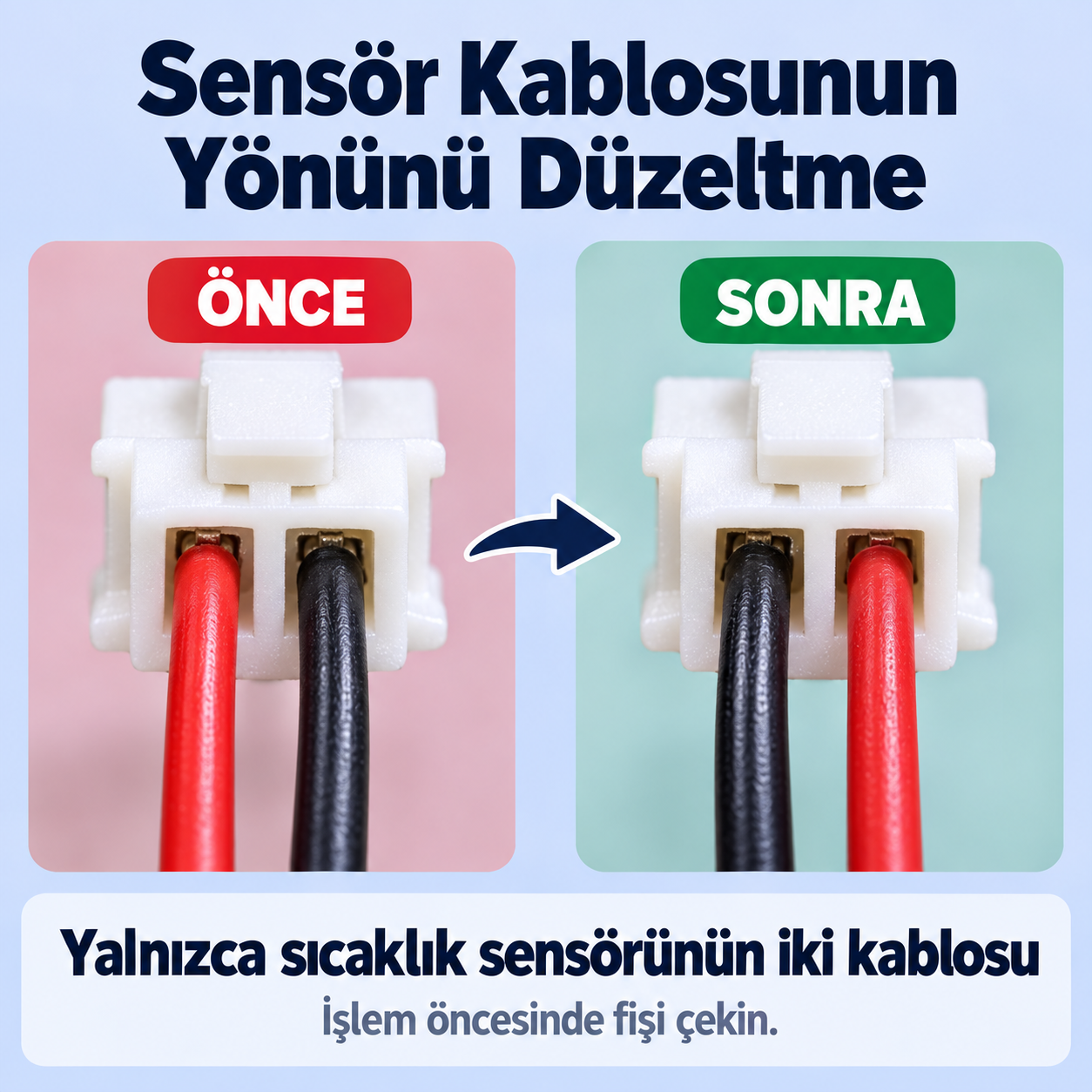
When we held the notches of the two sensor sockets in the same direction, we saw that the color order of the wires was different. In the socket of the new part we used, the red wire was on the left and the black wire on the right.
After unplugging the device, we swapped the two wires of the temperature sensor in the socket. Thus, the red wire moved to the right and the black wire to the left.
The image representatively shows the change we made. The socket notch is at the top in both views; the viewing direction is the same.
The wires we changed were only the two wires of the temperature sensor. We did not change the positions of the heater supply wires.
Polarity is important in thermocouple connections. In our device, after swapping the sensor wires, the error disappeared and heating worked again.
Wire colors can vary between different production batches. Therefore, instead of applying the color order in the image directly to every part, the sensor leads and the original connection direction should be verified.
5. Repairing the stand detection
During disassembly, we also broke the small reed switch that detects when the device is placed in the stand. We replaced it with a small reed switch we had; the new part detected the magnet in the stand and this function worked again.
When installing the reed switch, it is important to keep the position of the old part. Bending the legs right at the base of the glass body can cause the part to crack.
Repair result
The Bakon BK853S heater physically fit into our SAG-55. The error we encountered at first connection was resolved after swapping the two wires in the sensor socket. Replacing the reed switch also made the stand detection work again.
This experience showed that when using an alternative heater, the sensor connection must be checked as much as the mechanical compatibility. Our device became usable again; long-term durability and temperature accuracy with external measurement have not yet been evaluated.
Safety note: Disassembly and connection work should be done with the device unplugged and hot parts cooled down. In these mains-powered devices, sensor wires and heater supply wires must be clearly distinguished.