
LoRa Modules (433 / 868 / 915 MHz)
6 products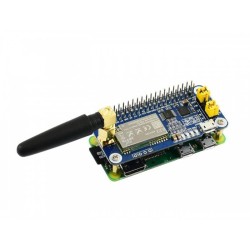
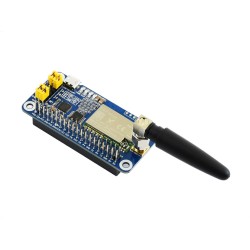
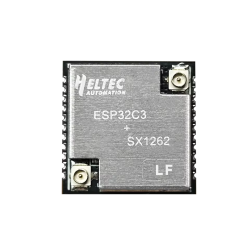
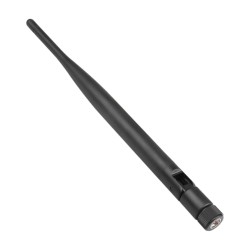
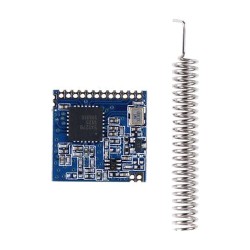
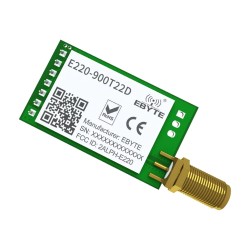
LoRa (Long Range) technology is a radio modulation technique designed for IoT applications requiring low power consumption and extended communication range. Operating in the unlicensed ISM bands at 433 MHz, 868 MHz, and 915 MHz, these devices are essential for sensor networks, smart agriculture, asset tracking, and remote monitoring. Our category includes RF modules based on Semtech SX1276/SX1278 chipsets, LoRaWAN-compatible gateways, high-gain antennas, and development boards for rapid prototyping. Each frequency band is subject to regional regulations; therefore selecting the correct module for your geographic location is critical.
Key Selection Criteria
- Frequency band: Ensure you use a band allowed in your country (e.g., 868 MHz in Europe, 915 MHz in North America, 433 MHz in some Asian regions).
- Communication interface: SPI is the most common; some modules offer UART output for easier integration.
- Output power and sensitivity: These determine your link budget. Higher power (+20 dBm) extends range but increases consumption.
- LoRaWAN support: Will you use point-to-point communication or a network server? LoRaWAN modules require OTAA or ABP activation.
- Antenna selection: Antenna gain, type, and impedance matching (50 Ohm) directly affect range. Long-distance links may need directional or high-gain antennas.
Common mistakes include using a module with the wrong frequency, ignoring regional duty cycle limits (1% or 0.1%), poor PCB grounding, and antenna mismatch. By choosing the appropriate spreading factor (SF7–SF12), bandwidth, and coding rate, you can strike the optimal balance between data rate and range. Our category brings together suitable solutions for both makers and professional system integrators.


