
Antennas
18 products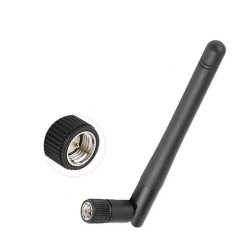
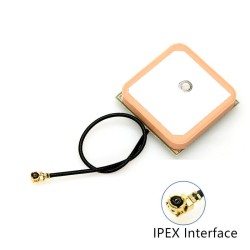
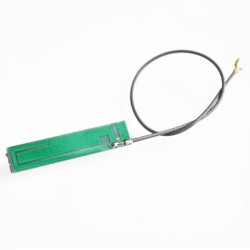
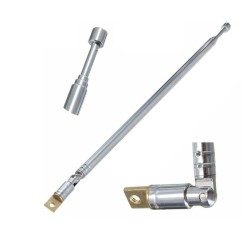
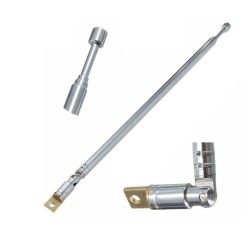
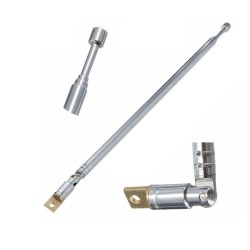
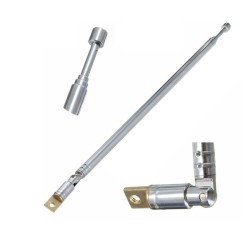
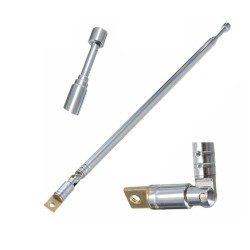
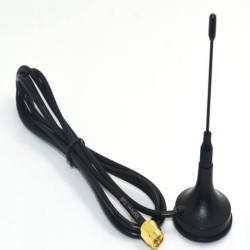
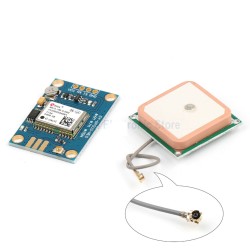
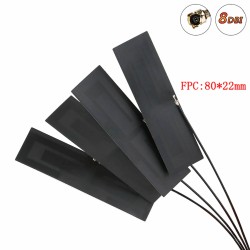
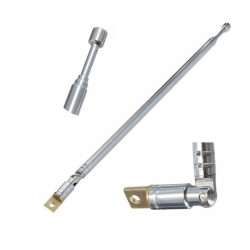
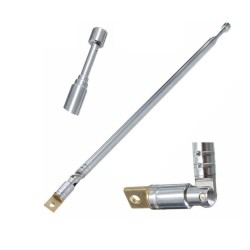
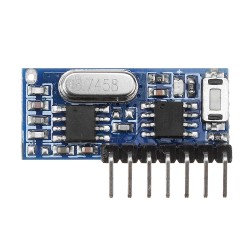
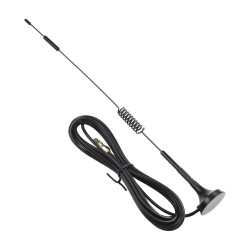
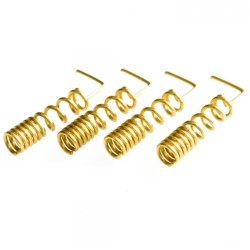
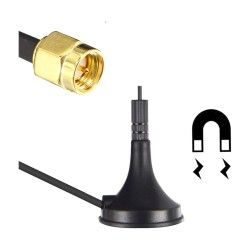
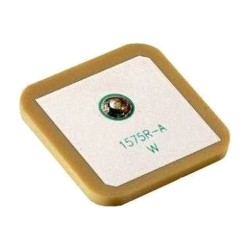
In wireless communication and IoT projects, the antenna is a critical component that directly determines signal range, data rate, and connection stability. Choosing the right antenna eliminates problems like weak signal, packet loss, or disconnections and increases system reliability. This category includes antenna types with different frequency bands, gain values, and connector interfaces.
Antenna Types and Applications
- Dipole and Monopole Antennas: With simple structures and omnidirectional radiation, they are commonly preferred in personal area networks such as WiFi, Bluetooth, and Zigbee.
- Patch and PCB Antennas: Low profile and surface-mountable, they are widely used in portable IoT devices, GPS receivers, and compact sensor nodes.
- Yagi and Log-Periodic Antennas: High directivity and gain make them suitable for long-range wireless links, especially in LoRa, GSM/LTE, and industrial radio applications.
- Helical Antennas: Their circular polarization capability is advantageous for satellite communications (GPS/GLONASS) and drone applications.
Key Selection Criteria
When selecting the appropriate antenna, first ensure that the operating frequency (e.g., 2.4 GHz, 868 MHz, 5.8 GHz) is compatible with your system. Impedance matching (typically 50 ohm) and the connector type (SMA, RP-SMA, U.FL, N-type) are decisive for physical connectivity. As the gain (dBi) increases, the signal is strengthened in a specific direction; however, in scenarios requiring omnidirectional coverage, antennas with lower gain and wider radiation patterns should be preferred. Additionally, the polarization (vertical/horizontal/circular) must be identical on the transmitter and receiver sides. Cable losses, mounting height, and environmental factors must also be accounted for in the overall link budget.


