
Light and Color Sensors
13 products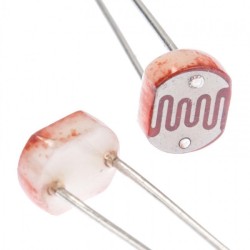
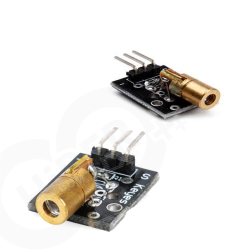
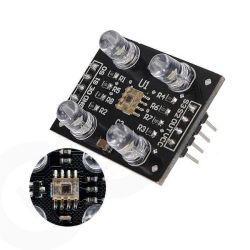
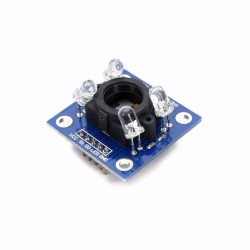
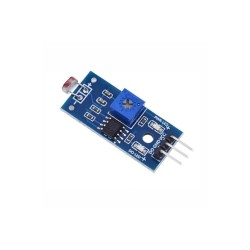
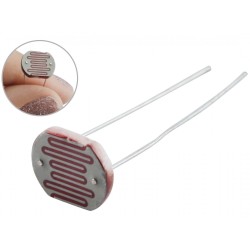
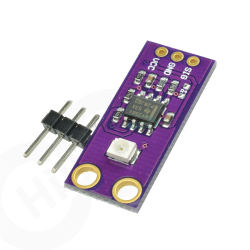
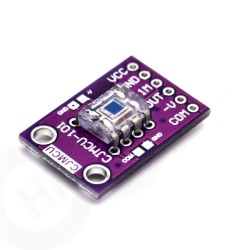
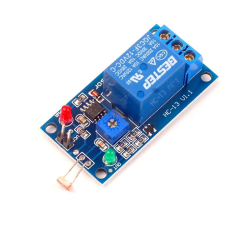
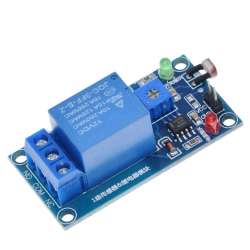
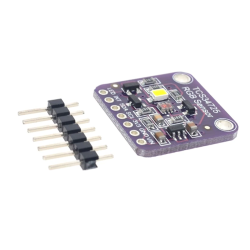
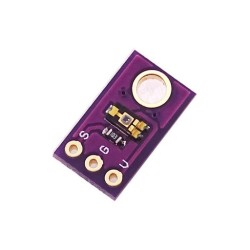
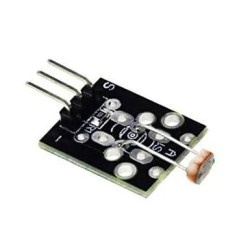
Light and color sensors are essential detectors used in electronics projects to sense ambient light conditions, recognize colors, or measure UV radiation levels. This category includes a wide range of models: from analog-output LDRs (photoresistors) and photodiodes to I2C digital ambient light sensors (BH1750, VEML7700), RGB color sensors (TCS3200, TCS34725), and UV index sensors (GUVA-S12SD, VEML6070). Each sensor type addresses different needs in terms of sensitivity, spectral response, and output interface.
How to Choose the Right Sensor
Consider the following when selecting a sensor for your project:
- Measurement goal: Do you need simple light/dark detection or precise ambient light measurement in lux? Is color recognition or UV measurement required?
- Communication interface: Analog-output sensors (LDR) connect directly to an ADC pin, while digital models provide more robust data via I2C or UART. Check your microcontroller's available pins and protocol support.
- Supply voltage and power consumption: For battery-powered portable projects, low-power modules like BH1750 or TCS34725 are preferable.
- Spectral response: Sensors with a response close to the human eye (e.g., VEML7700) yield more accurate results in lighting control applications.
A common mistake is converting LDR readings directly to lux values. The LDR's resistance changes logarithmically with light, and its sensitivity is limited to a narrow range. For professional measurements, digital ambient light sensors should be used. Additionally, when working with color sensors, ambient light color temperature and reflection conditions can affect results; calibration and control of external light sources are necessary.
This category includes modules compatible with Arduino, Raspberry Pi, ESP32, and other development boards, as well as sensors with protective enclosures for industrial applications. To facilitate your selection, product pages provide wiring diagrams and sample code.