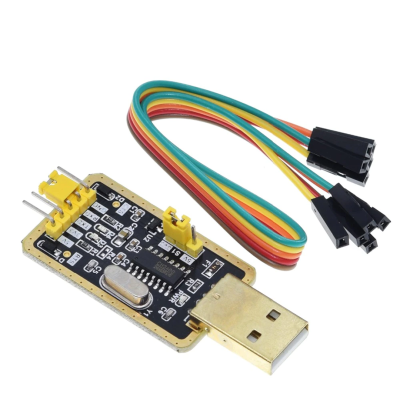
CP2102 USB-TTL UART Converter Module
- Product Code:
- 2018-2-686
- Availability:
- 10
Ex Tax: 8.33 ₺
- Same-Day Shipping For orders placed by 15:00
- Free Shipping On orders over 3000 TL
- Easy Returns 14-day right of return
-
 Secure Payment 256-bit SSL protected
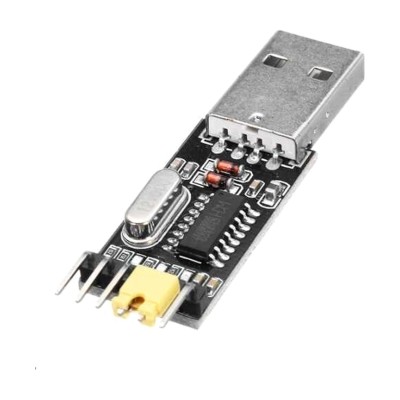
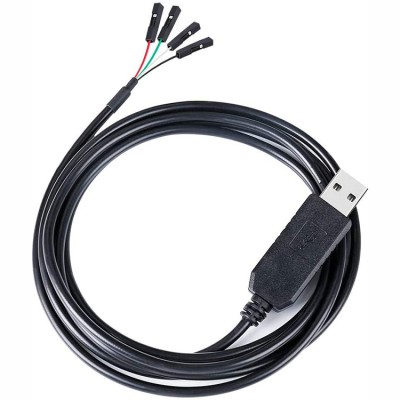
The CP2102 USB – TTL UART converter module uses the Silicon Labs CP2102 chipset to establish serial communication between computers and microcontroller-based boards. Thanks to its stable drivers that work out-of-the-box with Windows, macOS, and Linux, it is widely preferred for programming and debugging. With selectable 3.3V/5V output, it is compatible with many platforms such as Arduino, ESP8266, ESP32, and STM32.
Technical Specifications
| Feature | Value |
|---|---|
| Chipset | Silicon Labs CP2102 |
| Communication | USB → TTL UART |
| Operating Voltage | 3.3V / 5V selectable |
| Interface | TX, RX, GND, 3.3V, 5V |
| USB Type | USB Type-A |
| Baud Rate | 300 bps – 1 Mbps |
| Driver Compatibility | Windows, macOS, Linux |
| Protection | Built-in current protection circuit |
| Applications | Programming, debugging, UART communication |
Pin Connections
The module features the following standard pins:
| Pin | Description |
|---|---|
| 5V | 5V output |
| 3.3V | 3.3V output |
| GND | Ground |
| TXD | Module data transmit pin |
| RXD | Module data receive pin |
| DTR / RTS | (On some models) Auto reset/programming control |
When making connections, the TXD pin should be connected to the target board's RXD, and the RXD pin to its TXD (cross-connected).
Connection Examples
Usage with Arduino (Pro Mini etc.)
For boards like Arduino Pro Mini that require an external USB-serial converter, the following connection diagram is applied:
| CP2102 | Arduino |
|---|---|
| TXD | RX |
| RXD | TX |
| GND | GND |
| 5V / 3.3V | VCC |
On boards with auto-reset support, the DTR pin should be connected to the RST pin via a 0.1 µF series capacitor.
Usage with ESP8266 / ESP32
| CP2102 | ESP Board |
|---|---|
| TXD | RX |
| RXD | TX |
| GND | GND |
| 3.3V | 3.3V input |
Warning: ESP8266 and ESP32 boards must never be powered with 5V. Use the 3.3V output.