
ATtiny Development Boards
4 products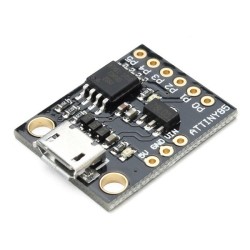
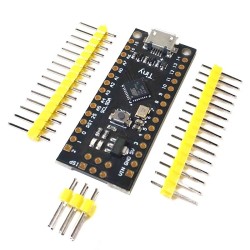
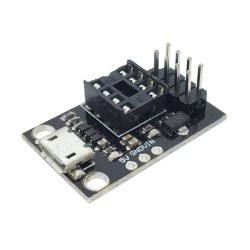
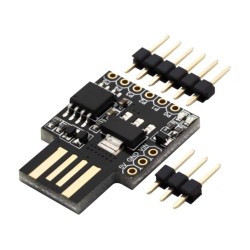
ATtiny development boards let you rapidly deploy Atmel (Microchip) low-power, small-footprint microcontrollers in your embedded systems. These boards excel in simple automation, portable sensor nodes, DIY toys, and battery-powered minimal applications. The ATtiny family features an 8-bit RISC core, low operating voltage, and ultra-low sleep current, making them ideal for energy-sensitive designs. Popular variants include ATtiny85, ATtiny84, ATtiny13A, and ATtiny26, each offering different GPIO counts, ADC channels, and memory sizes.
Key Selection Criteria
- Communication Interface: Most ATtiny boards lack native USB; they require an ISP programmer (USBasp, TinyUSB) or, like Digispark, include an onboard USB HID/CDC chip. Choose based on your flashing workflow.
- I/O Count: The ATtiny85 provides only 5-6 usable pins, while the ATtiny84 offers 12, enabling more complex hookups. Review pull-up, PWM, and external interrupt availability carefully.
- Ease of Programming: With the ATTinyCore package in the Arduino IDE, you can reuse most libraries, though the limited Flash (512 B-8 KB) calls for code optimization.
- Supply Voltage: Operating range of 1.8 V-5.5 V makes them perfect for battery-operated gadgets where voltage headroom is crucial.
Common Applications
ATtiny boards frequently handle tasks like reading I2C/SPI sensors, servo driving, LED animations, pulse measurements, or bridging simple RF modules. They are a go-to for developers building portable counters, mini game consoles, badUSB prototypes, or IoT edge nodes. Breakout models with a built-in debug LED speed up prototyping.
Keep in mind hardware UART is scarce on most ATtiny chips; SoftwareSerial is feasible but consumes pins and CPU cycles. For high-resolution graphics or complex network stacks, a more powerful MCU is recommended.