
ESC (Electronic Speed Controller)
5 products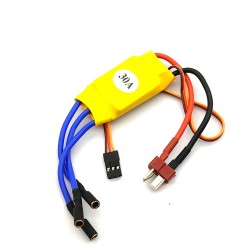
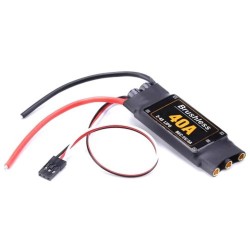
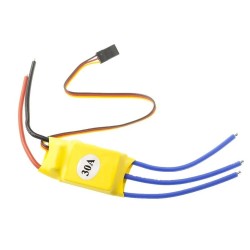
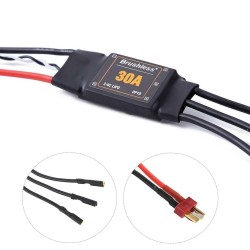
The ESC (Electronic Speed Controller) is a critical power electronics unit used in drones, RC planes, helicopters, cars, boats, and other remote-controlled vehicles to precisely manage the speed and direction of brushed or brushless motors. It interprets the signal from the receiver and adjusts the current and voltage delivered from the battery to the motor, directly determining acceleration, deceleration, and braking response.
Key Factors When Choosing an ESC
Selecting the right ESC is vital for stable operation and longevity. First, confirm compatibility with your motor type (brushed or brushless). Then evaluate these parameters:
- Current rating (Amps): Choose an ESC with a continuous current rating at least 20% higher than the motor's maximum draw. Also consider the burst current handling duration.
- Voltage range: Typically checked for compatibility with 2S (7.4V) to 6S (22.2V) LiPo packs. Higher cell counts (12S and above) are reserved for industrial UAVs.
- BEC (Battery Elimination Circuit): Integrated BEC provides a regulated voltage (usually 5V/6V) to the receiver and servos without needing a separate battery. High-torque servo setups may require an external BEC (UBEC).
- Firmware and protocol: ESCs flashable with open-source firmware like SimonK, BLHeli_S, or BLHeli_32 offer finer tuning. Fast protocols such as Oneshot125, Multishot, DShot300/600/1200 determine compatibility with the flight controller.
- Size and weight: Especially critical for racing drones and micro vehicles; choose between AIO (all-in-one) boards with 20x20mm or 30.5x30.5mm mounting patterns or discrete ESC modules.
In typical scenarios, separate OPTO ESCs are used for brushless motors, while simpler ESCs are chosen for brushed motors. Recently, smart ESCs capable of telemetry data (temperature, current draw, RPM) and integration with FPV systems have become increasingly popular.