
Magnetic Sensors & Encoders
8 products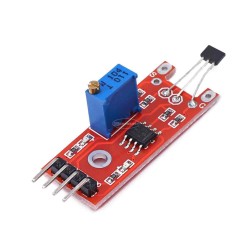
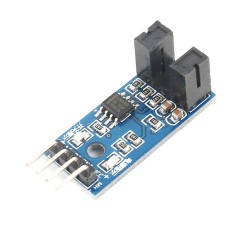
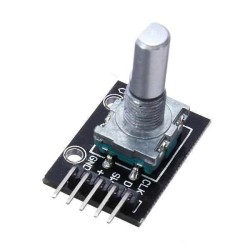
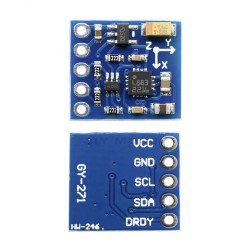
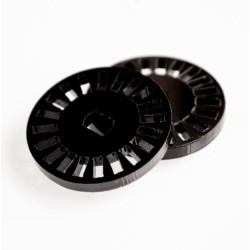
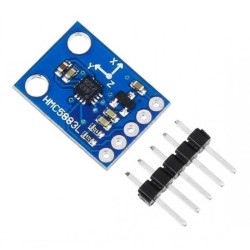
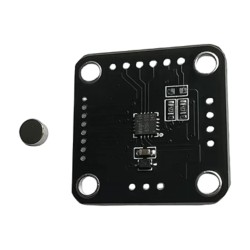
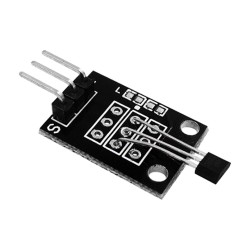
Magnetic sensors and encoders are essential components for precise detection of position, motion, and angular changes. Under this category, you can find Hall effect sensors, reed switches, magnetoresistive sensors, magnetic encoders, and optical encoders. Each technology serves critical roles in a wide range of applications, from industrial automation and robotics to CNC machines and measurement systems.
Types of Magnetic Sensors
- Hall Effect Sensors: Provide non-contact magnetic field sensing with switching or analog output. Commonly preferred in automotive, motor control, and magnetic stripe reading. When selecting, pay attention to operating voltage, output type (open collector, ratiometric analog), and sensitivity (mV/Gauss).
- Reed Sensors: Operate on mechanical contact principle, known for low power consumption and high voltage tolerance. Widely used in door/window alarms, flow meters, and simple position detection. Consider glass tube size (miniature/standard), contact rating (W/VA), and switching frequency before purchase.
- Magnetoresistive Sensors: Measure magnetic field-induced resistance changes, offering high resolution and angular accuracy. TMR/GMR-based models are used in precision positioning and current sensing applications. I²C, SPI, or analog interface compatibility and resolution are key selection factors.
Encoder Technologies & Selection Criteria
Encoders convert mechanical motion into electrical signals for position, speed, or direction feedback. Two main types are available:
- Magnetic Encoders: Read from a magnetic disk or strip, providing robustness and immunity to dust/moisture. Ideal for harsh industrial environments and outdoor use. Resolution (CPR/PPR) and communication interface (RS-485, SSI, incremental/absolute) must match project requirements.
- Optical Encoders: Use light and photodetectors to achieve very high resolution, favored in machine tools, medical devices, and servo drives. More sensitive to dust and vibration, so consider appropriate protection (IP rating) and mounting orientation.
Common mistakes include misaligning the encoder’s mechanical coupling, using an inadequate power supply, or failing to account for external magnetic interference with magnetic encoders. By analyzing your actual needs for resolution, environmental conditions, and signal interface, you can make the optimal choice.