
Accelerometer & Gyroscope Sensors
7 products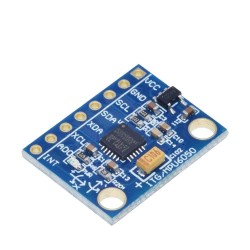
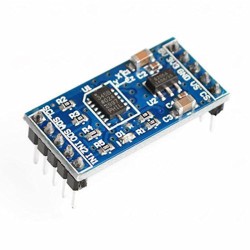
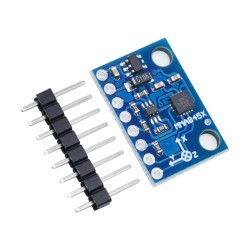
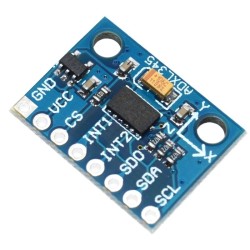
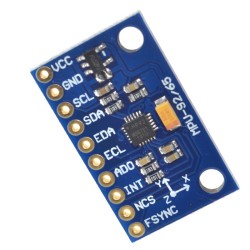
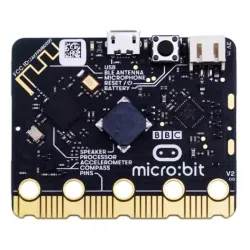
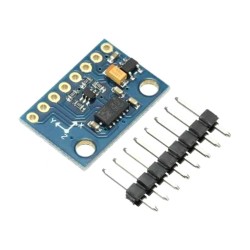
Accelerometer and gyroscope sensors are critical components used in electronics projects for motion detection and orientation determination. Accelerometers measure linear acceleration and tilt, while gyroscopes detect angular velocity changes. This category includes MEMS-based analog and digital models, 3-axis accelerometers (such as the ADXL335), 3-axis gyroscopes, and 6-axis IMU (Inertial Measurement Unit) sensors (like MPU6050, LSM6DSO) that combine both functions on a single chip.
Selection Criteria
- Measurement Range and Sensitivity: Accelerometer g-scales vary from ±2g to ±16g, while gyroscope angular rate ranges span ±250°/s to ±2000°/s. Choose based on your project's required dynamic range and resolution.
- Communication Interface: Analog output, I2C, or SPI protocols determine microcontroller compatibility. Digital sensors generally offer lower noise and easier integration.
- Supply Voltage: Ensure the sensor's operating voltage (3.3V or 5V) matches your development board's logic level; otherwise, a level shifter may be needed.
- Noise and Drift: Gyroscopes suffer from zero-rate offset and temperature-dependent drift. For long-term motion tracking, complementary or Kalman filter algorithms are essential. Check noise density specifications (µg/√Hz or dps/√Hz) when comparing models.
Application Areas
These sensors are used in drone stabilization, robotics balance control, motion capture in game controllers, industrial vibration monitoring, sports science, virtual reality, and IoT condition monitoring. 6-axis IMUs combine accelerometer and gyroscope data for precise navigation and stabilization. If your project only requires tilt sensing, a 3-axis accelerometer is sufficient; for measuring rotational motion, a gyroscope or an IMU should be selected.